How to Have a Career in Temporary Public Art
In this piece
The first chunk applies to everyone, the second is for those like me, who started in the visual arts and migrated to temporary public art. I started writing this while I was preparing for a public art panel on Paddy Johnston’s Netvvrk.
Why You Need to Start Learning to Ask, Why Me?
Artists tend to think from the inside out because that’s the habit of making work. Reversing this and trying to see ourselves and our work as the world sees us can be so emotionally painful we avoid it completely. I certainly do.
But the times I’ve been able to overcome this have propelled my career.
Getting a great art commission or gig isn’t only about you or your work. It’s actually about the presenter first, and you second. Artists who don’t learn this can miss out on building a more robust and sustainable career.
[context] When I say presenter, I mean the person responsible for programming a festival, a theater, a city, or any kind of performance or temporary public art opportunity. You might think of a curator, they overlap in some ways, but a presenter’s concerns encompass more than the act of curation.

Me meeting with a cautious museum director in Abu Dhabi, 2011. The angry looking guy with the sunglasses was my driver, and was actually really sweet.
The world of temporary public art, street performances, art interventions, (and all the other ways to say it) is big, dynamic and fundamentally quite unstructured. If you’re a visual artist coming out of gallery and museum culture, or a performing artist used to working for theaters and venues, then the first thing to get your head around is there isn’t just one kind of presenter.
Just off the top of my head: European-style arts festivals (not always in Europe, and sadly rare in the US), city festivals, brands, major event programs like the Olympics & World Cup, US public art programs, museums, and city or national anniversary programmers — and the list goes on. In the US, Creative Time and the Public Art Fund are worth knowing, though both have become increasingly entangled with the commercial art market.
The fact that the field is so multivariate means there’s room in the ecosystem for many different kinds of artists. But each of these presenters comes with their own hierarchy of needs.
They’re not all going to be concerned about the same things. If you are coming from a highly-structured background, like museums or theaters, this might mean unlearning some professional habits you take for granted; this has real implications.
When was the last time you asked someone why they chose to book you? Why they present you, why they choose you or your work?
Think of the best opportunity you ever got: do you know why you got it? If the first thing that springs to mind is because your work is brilliant, then the answer is… you don’t know why you got it. You should find out.
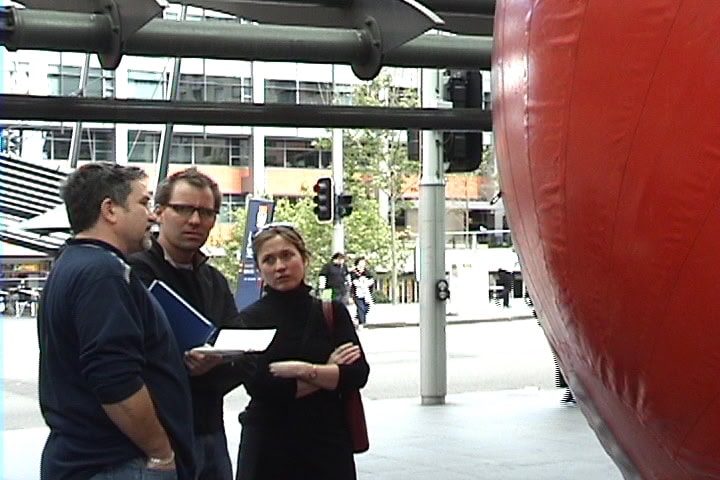
A conservator, me & Bridget in Sydney, 2002. I was thinking, “why do we have a conservator for PVC?”
I was terrified when I first asked how I got an opportunity.
I was in Sydney, Australia, for my first big gig. I had given up my teaching job to do it (which everybody had prudently told me was foolish).
But it turned out, Bridget, a young public art curator for the city, was happy to talk about it. Because for her it was a story of how she had tried and failed and then tried again to bring me to Sydney; she had to convince her boss and it was a victory that she was rightfully proud of.
But inside that story, I learned that the entire opportunity had hinged on her boss being convinced by one mention of my work in Sculpture Magazine. It had sealed the deal on her second attempt.
And I knew that the one-page article was basically a rewording of a press release & photos I had sent the magazine. It was a huge lesson in the power of press, and that press itself could be generated.
Learning by asking can be frightening if you live in an approval mindset — that a commission has conferred a mysterious something upon you, which might evaporate if you ask why you were chosen. Surprisingly, it’s the opposite. (BTW the ‘approval mindset’ idea goes back to Colleen Keegan when Creative Capital still did artist education.)
How to Ask, Avoid & Ignore Praise
Asking this kind of question, in the right moment & tone, is the mark of a professional. It’s an amateur who’s afraid to discuss how the cultural sausage gets made.
When you ask, make sure to convey that you are not looking for praise, you want to understand their process, their challenges. It’s fantastic if you can find out what or who else they considered and why?
Be appreciative of compliments, but don’t let them off the hook with them. (Your doing a lightweight version of Fitzpatrick’s Mom Test, which is basically how to get people not to lie to you like your mom does, yeah…)
What I Learned About How Presenters Saw My Work
My lessons will not be your lessons. That’s the whole point, they’re individual insights, but to give you a sense of it, here are some things I learned along the way & why they matter.
And as a reminder, we’re not talking about changing the work, but rather how to frame & reflect back to presenters the things that are most likely to be important to them.
You don’t have to change your work, just your frame.
So the Sydney story I just told. I learned that 1. Presenters are often administrators and want to reduce risk. Press can do this, even if it’s not a review but just a news piece. And 2. Press is an industry you can feed; you don’t have to wait for it to notice you.
I learned from listening to festival directors that media was part of the problem I was solving for a presenter. I was often kicking off a larger festival, or series of art events, and they wanted media attention for everything they’d programed and my work was a way to make that happen. A different but related lesson from Sydney.
So I put a lot of energy into packaging up my clippings & presenting my press early on. I don’t do this as much now, tbh I get there in other ways, but did for at least the first 10 years.
I also learned that the mobility of RedBall in reaching different neighborhoods & communities was very important. The flexibility of the work had them imagining new possibilities for environments they wouldn’t typically be able to program into. I reflected this into my documentation efforts, not just showstopper sites, but a real diversity.
Of course, these would’ve been just as true of my work had I never asked, but then I wouldn’t know how to frame my work.
In the beginning, if you don’t know, make some educated guesses and then start asking when you can. Practice the habit and you’ll get better at it.
What you learn will flow into not just every aspect of how you present your work, but how you document it and talk about it with presenters.
Next, here is a thing, I went to art school and I’m sure like almost every other MFA, I dreamed of a gated and refined gallery & museum career.
But my actual career operates in the performing arts model, which is an entirely different culture. For years I exhausted endless technical directors and line producers by not understanding the difference - sorry everyone! Here’s what you need to know.
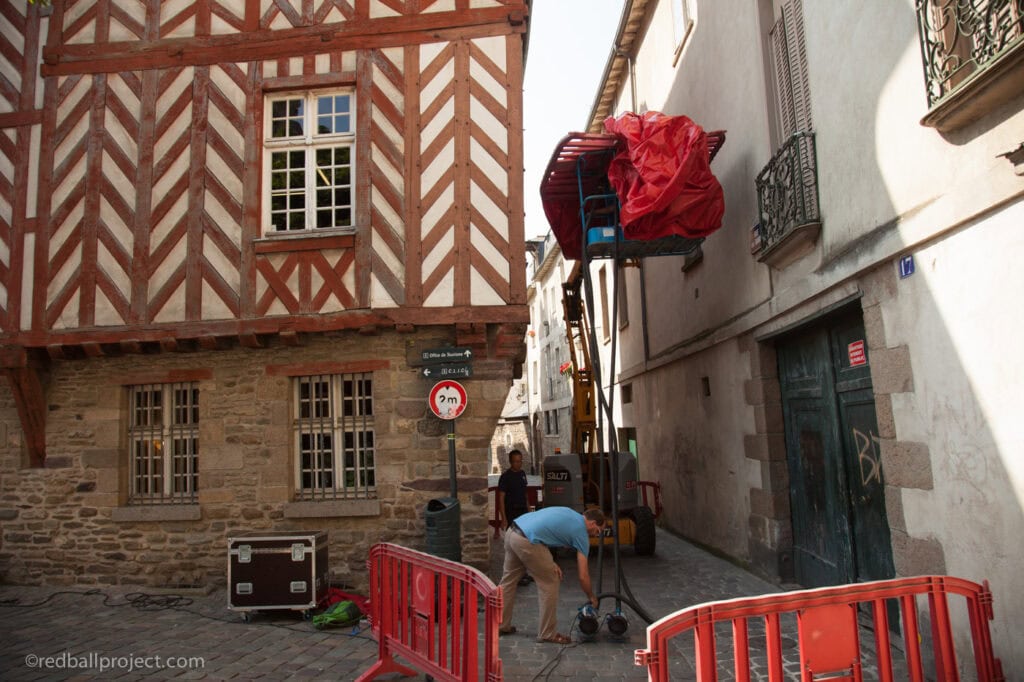
Installing in Rennes, France. 2014
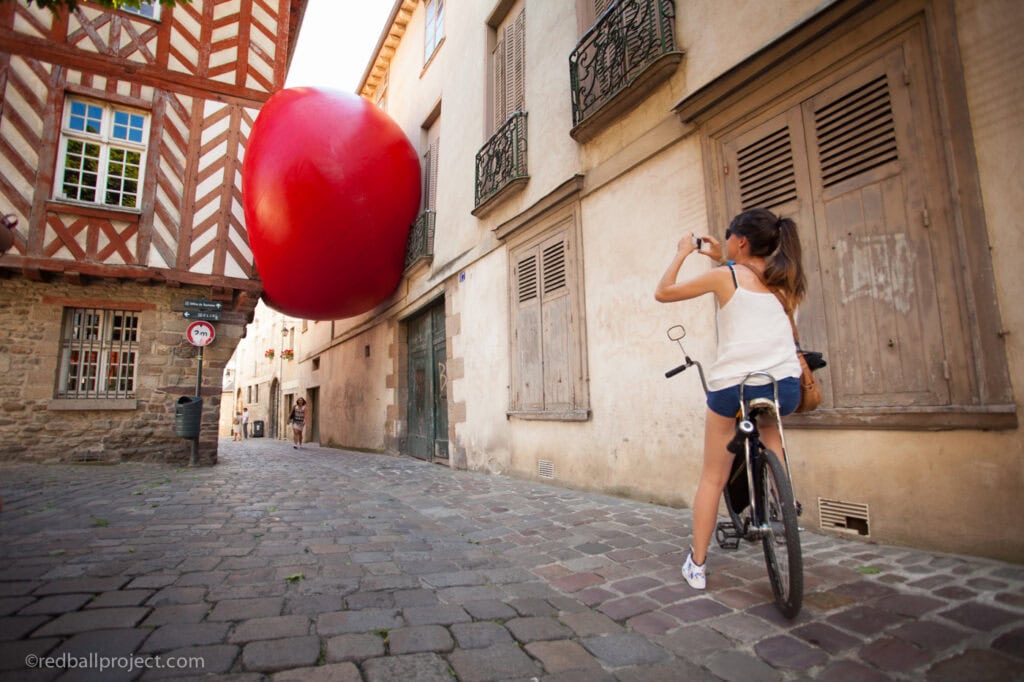
RedBall Rennes, France. 2014
Visual vs Performing Arts Culture & Why Relevant to Temp/Street Work
Certain temporary public art projects - street art in Europe - are works that can be repeated or toured. Like Candy Chang’s ‘Before I Die’, Luke Jerram’s ‘Play Me, I’m Yours’, or my work. Or even seminal pieces like Nina Katchadourian’s “Natural Car Alarms”, WHICH I LOVE, and could have toured but it didn’t.
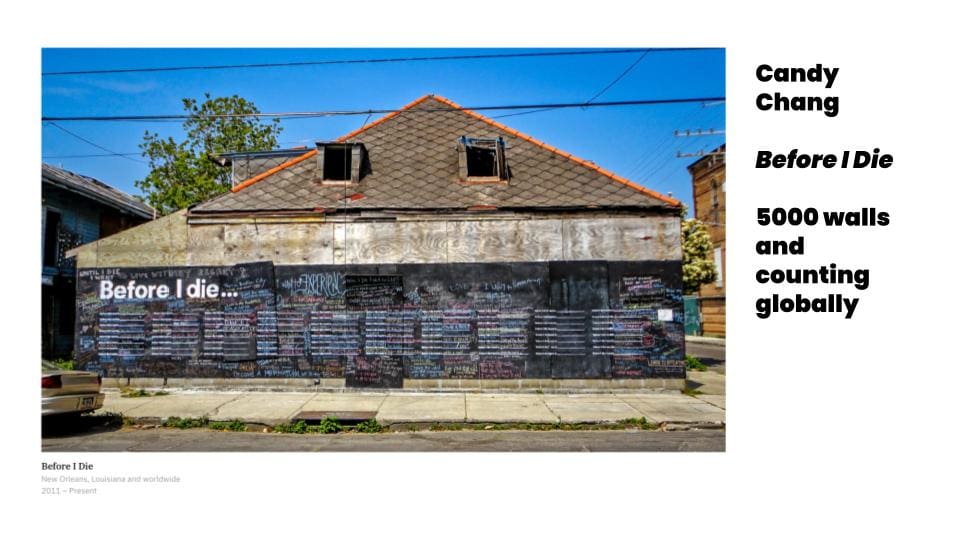
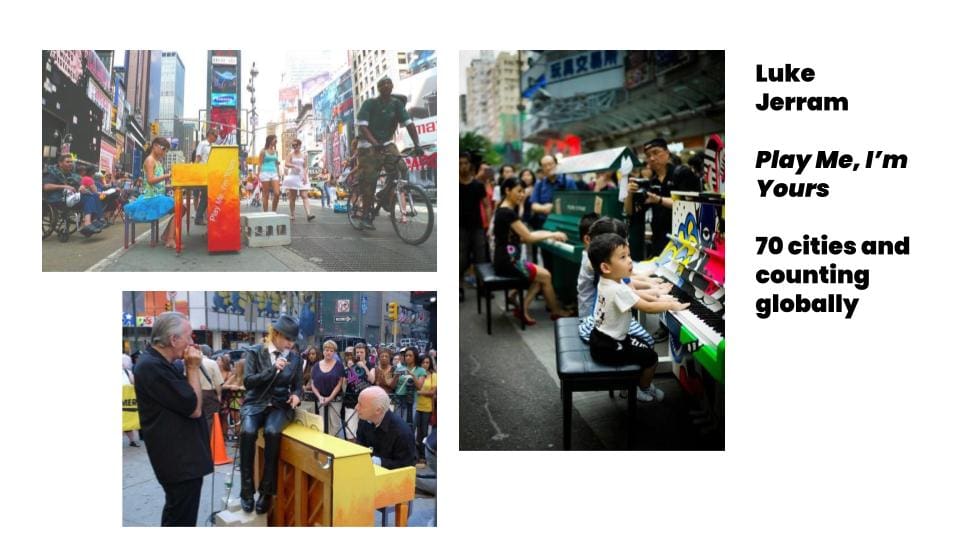
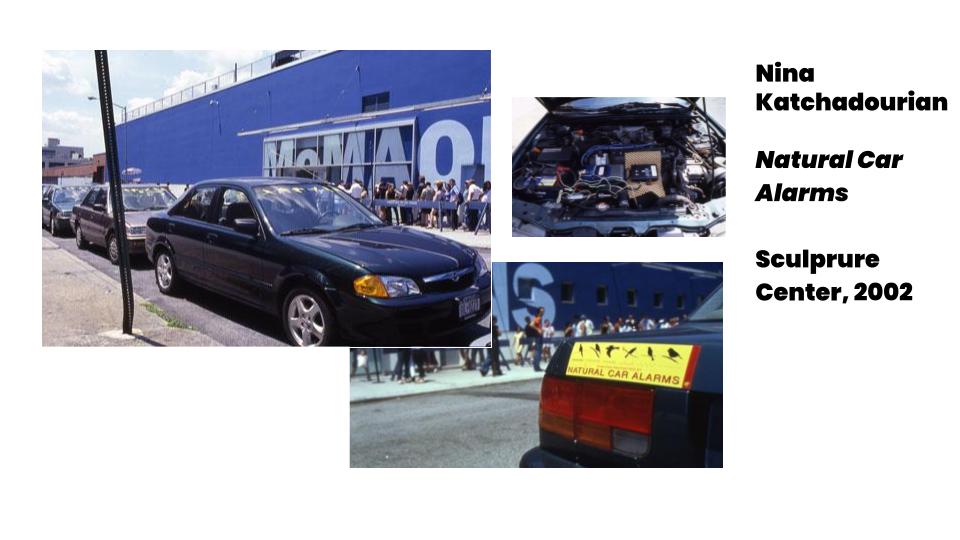
For me, this is distinct from temporary public work that is more akin to ‘museum works done publicly’, examples such as when Tony Oursler or Anish Kapoor work with the Public Art Fund.
The difference is not just funding models, but also, I think importantly, the idea of sequentiality. That a project can be performed repeatedly, that it can tour, and this moves us into a performing arts construct in terms of presenters & culture.
When I started RedBall, I didn’t understand this, I kept trying to put a square peg in a round hole. I was treating a touring work like a one-time museum installation; it was painful and I didn’t know why.
These two fields need a radically different approach both practically and culturally, and I’ll always be grateful to Jenny, the producer who eventually knocked me over the head in Norwich, England, and taught me how to write a tech rider.
There is a distinct cultural mindset between visual arts and performing arts that visual artists need to understand. It flows into endless practical details, but let’s talk about where it starts.
When someone asks me “what’s it like to do the same work over and over, 50 cities!” I know they’re coming from the visual arts world. Because within the visual arts world value is based on exclusivity and scarcity.
Think about the most valuable visual art pieces in the world. A unique painting or sculpture that you probably have to fly to visit, if you can even see it. OK, now consider the most valuable performing art works and artists in the world.
Think Wicked, Angels in America, Book of Mormon or The Rolling Stones & Taylor Swift. Works & artists that tour forever and as many people can see as possible — that is success. It’s a mistake to think this distinction is only between elitism and populism; it’s not, because those are consequences, not origins.
(So BTW my answer is, I feel incredibly grateful to be able to go to new cities, explore and play with them through RedBall. No, I’m not bored.)
What do I mean by consequences? As an example, I call RedBall a performance not an ‘installation’.
Because a performance exists for an audience, and ‘installation’ is just the description of a process. One is performer thinking, the other is art world thinking.
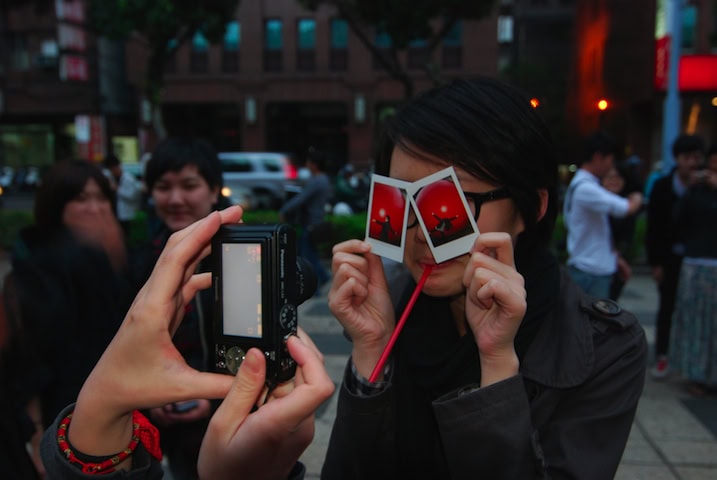
April 13th, 2010. Taipei MOCA, last day of RedBall Taipei.
What Does Audience Mean
Instead of trying to list an endless number of tiny details, I think the core concept that filters though the performing arts - that is structurally different than making art to sell - is that everything flows from the audience. Just as you ask the presenter how they chose you, the best presenters are looking to another source for insight, their audience.
The most talented presenters and festival directors I’ve worked with around the world are all on a version of the same quest. To understand their audience well enough so they know where they can take them on a journey via their programming. This is the art of a great festival, and it’s hard to do.
From the outside it’s easy to think that ‘audience’ means numbers, or volume, but it is actually about creating experience.
Budgets for the Art World vs the Festival World
Let’s do a concrete example of how I changed what goes into budgets and invoices for any proposal.
Grant applications & RFPs teach you to provide detailed budgets, not because they care where each dollar is spent, but because it’s a signal of competency that can reduce their risk. Especially for a new artist. It makes sense there.
But I discovered with festival presenters that that kind of quote created the idea of optionality, like it was a menu they might cross items off of. This created needless conflict. So now a quote from me is a number of days, a fee, and a list of what I deliver and they need to deliver. Not a cost to each item.
It makes it much easier to book, because they are not making as many decisions, and at the end they need the total, not all the details. So even in budgets and quotes, make sure you understand the culture & expectations you’re pitching to.
It’s a Bit Late for a TL;DR Takeaway, Which I Don’t Have Anyway but Let’s Try
Yes, it’s emotionally terrifying to realize that the work you care for so much actually operates in a marketplace of one kind or another. But career ignorance is not bliss, and you need to figure out where, how, and why your work fits into the world. Asking in person the people who make these decisions is the best way. The good news is it’s hard, so most people won’t bother. You should.